
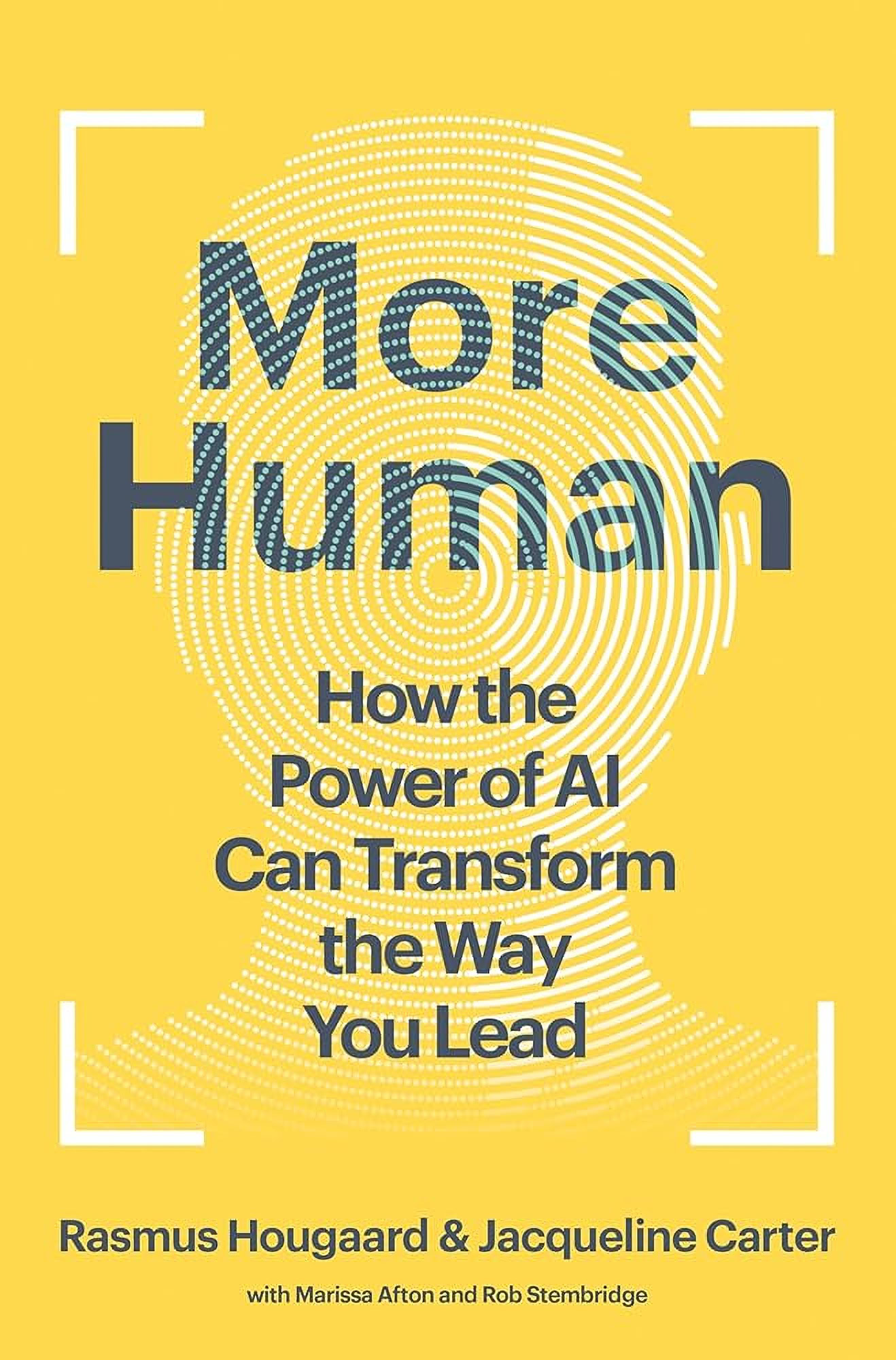
What is important about this book
The exponential growth of technology is transforming contemporary work and, with it, the way leaders and managers are called to decide, orient, and take responsibility. It is generating a wave of information, innovation, and complexity that opens unprecedented opportunities while placing people under increasing cognitive and emotional strain. In this context, the human mind is called to operate under radically new conditions, where it is no longer enough to withstand the flow of information, and the quality with which it is interpreted, integrated, and translated into decisions becomes central. It is for these reasons that, in the age of AI, a new imperative emerges: to refocus on the mind of the leader, where meaning, judgment, and decisions take shape.
AI makes it possible to compile, process, and analyze massive amounts of information. Yet this capability, on its own, is insufficient. What remains irreplaceable is the leader’s capacity for wisdom. The AI-augmented leader applies wisdom so that decisions are not merely smart, but wise, ensuring that data-based choices align with organizational values, culture, and ethical standards. In this way, leadership becomes the bridge between AI’s computational intelligence and the human understanding of meaning, values, and emotions. Leadership and values come first; AI follows.
Approached with foresight, AI can mark the dawn of a golden age for leadership. By delegating tasks to AI and using it to augment skills and behaviors, leaders gain the opportunity to unlock a more human experience of work while enhancing organizational performance. The central tension is not whether to use AI, but how to do so without eroding attention, judgment, and humanity.
The authors of this book are Rasmus Hougaard and Jacqueline Carter. Hougaard is the founder and Managing Partner of Potential Project, a global research and leadership development firm dedicated to creating a more human world of work. Carter is an international partner and leads Potential Project in North America, where she works with senior leaders across industries to navigate leadership challenges and implement complex organizational change.
Quotes
- “Artificial intelligence (AI) has brought leadership as a practice to a major inflection point”.
- “Determining whether AI will be a force for good is up to you”.
- “AI can make leaders more human”.
- “However, as great as AI can be, it alone cannot make us better leaders”.
- “But embracing AI is not an either-or situation. It isn’t about either using AI or being human”.
- “Humans have strengths and limitations, and so does AI”.
- “The AI-augmented leader is one who develops three core human qualities of awareness, wisdom, and compassion”.
- “In the age of AI, human leadership demands awareness”.
- “In the age of AI, it is more important than ever for leaders to double down on their capacity for wisdom”.
- “As amazing as AI is, it will never replace the human capacity for great compassion”.
- “Despite — or perhaps because of — their flaws and vulnerabilities, employees prefer to be led by a human instead of by AI”.
- “AI can be a double-edged sword for leaders”.
- “With the introduction of AI, leaders are able to level up and become even more human, bringing even more of the best of their humanity to their leadership”.
Structure and contents of the book
Hougaard and Carter organize the book around the Human Leader Compass, a framework designed to orient leaders in integrating human and AI capabilities.
Chapter 1 defines what is meant by AI, explores benefits and risks for leaders, and introduces a both/and approach to leadership, including the art of the toggle between human judgment and AI-generated input.
Chapter 2 marks the starting point of the Human Leader Compass by deliberately pausing the focus on technology to concentrate on the core of great leadership: the human mind. Here the authors introduce the inner game of leadership, presenting research-based approaches to cultivating clarity, calmness, focus, sound judgment, and resilience in increasingly complex environments.
Chapters 3, 4, and 5 develop the three core qualities of the AI-augmented leader: awareness, wisdom and compassion.
- Awareness addresses the human capacity to perceive reality clearly and create context.
- Wisdom focuses on discernment and the ability to ask good questions while thoughtfully evaluating AI-generated answers.
- Compassion centers on leading with heart while using algorithmic insights to support authentic human experiences.
These qualities are grounded in research showing that leaders high in awareness, wisdom, and compassion are better positioned to leverage a human–AI positive feedback loop. These qualities are made actionable through a set of mindsets that shape how leaders lead themselves, relate to others, and influence the broader system.
Chapter 6 brings the journey together, translating these elements into best practices for transforming leadership. Each chapter is self-contained and actionable, while remaining tightly linked to the overall progression of the book.
Instructions for reading this book
This book is best approached as a driver’s manual for leaders and managers, rather than a catalogue of AI tools. Its value emerges in moments of real leadership pressure, when decisions must be made under uncertainty and leaders must decide how technology will shape, rather than replace, their judgment. It is particularly useful during periods of organizational change, workforce transition, and ethical tension.
The authors encourage an active reading approach. The research foundation is extensive, but the intent is practical: every explanation, example, and study is designed to translate into guiding practices. AI insights are treated as inputs, not answers, helping leaders surface blind spots, expand awareness, and challenge assumptions without relinquishing responsibility.
Although chapters can be entered individually, the book gains coherence and depth when read sequentially. Its structure mirrors the work of leadership in the age of AI: understanding technology as an amplifier, strengthening the inner game, and deliberately cultivating awareness, wisdom, and compassion in daily leadership practice.
The closing invitation is clear and demanding. Leadership stands at a decisive moment. Technology can either dull human judgment or sharpen it. The question is not whether AI will be used, but how intentionally leaders choose to engage with it. This book calls leaders to slow down rather than automate reflexively, to refine judgment instead of outsourcing it, and to bring ethical clarity and human heart into AI-augmented work. Used in this way, it becomes a road map for navigating a critical inflection point—where being more human, not less, determines who moves forward and who is left behind.